
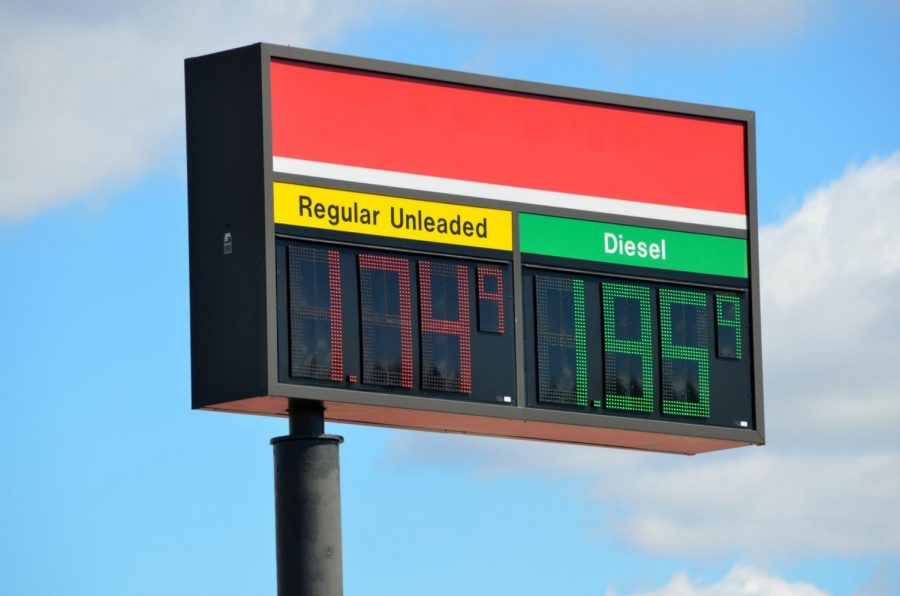

Throughout much of 2025, the White House highlighted lower gasoline prices as evidence of economic prosperity; however, current patterns reveal that costs are now nearly identical to those of a year prior, undermining that assertion.
President Donald Trump and his economic team have often highlighted lower gasoline prices as evidence of improved affordability under his administration. For much of 2025, this argument appeared to hold weight, as prices at the pump were noticeably lower than during the same period under former President Joe Biden. However, recent data suggest that the gap has largely vanished, raising questions about one of Trump’s most visible economic talking points. According to AAA, the national average for a gallon of regular gasoline reached $3.055 on Tuesday, nearly identical to $3.056 a year ago. This convergence marks a significant shift from earlier in the year, when gas was 30 to 50 cents cheaper than the prior year, giving the administration a strong comparative advantage in messaging on household costs.
The narrowing difference has implications not only for political rhetoric but also for public perception. Gasoline prices are one of the most tangible measures of inflation for everyday Americans, and even minor fluctuations can influence opinions about the state of the economy. While prices remain well below the peaks of 2022, the disappearance of last year’s discount undermines claims that Americans are paying substantially less for fuel under the current administration.
The boundaries of financial communication
Throughout 2025, Trump often highlighted fuel costs as a core component of his economic discourse. Speaking in Miami on November 6 during a policy address, he declared, “Gasoline prices have dropped to their lowest point in twenty years.” However, actual prices then stood at an average of $3.08 per gallon—a modest decrease from the prior year but nowhere near historical minimums. Treasury Secretary Scott Bessent echoed this perspective in a Fox News discussion, stating that lower oil and gas expenses were “truly essential for affordability.” Nevertheless, by the close of that week, gasoline prices had actually risen by three cents compared to the corresponding period in 2024.
For numerous Americans, these inconsistencies foster a feeling of detachment separating political discourse from their daily realities. A survey by CBS News reveals that 60% of those polled think Trump depicts economic conditions more favorably than they truly are. Just 27% believe he accurately represents prices, while 13% view his statements as overstating negative aspects. These disparities underscore the difficulty of employing volatile goods such as gasoline to forge a consistent story of economic accessibility. Costs are shaped by a broad spectrum of international and national elements, rendering exact comparisons challenging and frequently transient.
Local differences in gasoline prices
While national averages show parity with last year, state-level data reveal more nuanced patterns. Drivers in certain regions continue to enjoy year-over-year savings, particularly in states like Colorado (24 cents cheaper), Wyoming (19 cents), Hawaii (12 cents), Wisconsin (12 cents), Maryland (9 cents), and North Dakota (9 cents). These reductions offer some relief for consumers ahead of the busy Thanksgiving travel period, especially in areas where fuel represents a significant portion of household spending.
Conversely, other states are experiencing increases in gasoline prices relative to 2024. Oregon leads the pack with a 27-cent rise, followed closely by Alaska (26 cents), Washington (20 cents), California (16 cents), Idaho (16 cents), Arizona (14 cents), Michigan (9 cents), and Nevada (9 cents). This divergence underscores the complex interplay of regional market conditions, state taxes, and local supply factors that shape the price drivers encounter at the pump. While national messaging focuses on averages, consumers often experience these regional variations more acutely, influencing public perception of economic trends.
Despite these differences, gas prices under Trump remain comparatively low on a historical scale. GasBuddy projects that the average national price for Thanksgiving 2025 will be $3.02 per gallon, tied with last year for the lowest Thanksgiving price since the pandemic-driven collapse in 2020. Adjusted for inflation, this is the most affordable Thanksgiving fueling cost since 2016, excluding the anomalous pandemic period. Patrick De Haan, head of petroleum analysis at GasBuddy, notes, “People don’t feel as bad about filling up their tank because they are making more money. Policy hasn’t really done anything.” This sentiment highlights that while absolute prices matter, household income and purchasing power ultimately shape consumer experience more than political messaging.
Oil market trends and outlook
Looking ahead, some analysts anticipate further declines in gasoline prices in 2026, driven by projected shifts in global oil supply and demand. According to research from JPMorgan Chase, oil supply is expected to outpace demand next year, creating the potential for significant price reductions. If OPEC does not intervene, Brent crude could drop to the low $50s per barrel by the fourth quarter of 2026 and potentially reach the $40s by year-end. By 2027, a projected supply glut may push prices further, with the possibility of Brent crude averaging $42 per barrel and even dipping into the $30s without production adjustments.
Veteran oil analyst Tom Kloza, currently with Gulf Oil, agrees that market dynamics suggest reduced prices for the upcoming year. “The path in 2026 is straightforward. All indicators point to an excess of crude oil,” Kloza stated. “Trump faces numerous challenges, but this isn’t one of them. It might not be a guaranteed shot, but it’s likely an easy one.” Experts link this anticipated decline to a rise in production, stable international markets, and an expected slowdown in demand expansion. The projection indicates that although immediate communications might face examination, long-term fuel costs could still become more manageable if market predictions prove accurate.
Public Opinion and Governmental Repercussions
Gasoline prices are more than just an economic metric; they serve as a crucial political barometer. Historically, sharp increases in fuel expenses have provoked public outcry, exemplified by the surge to $5 per gallon after Russia’s 2022 invasion of Ukraine, which presented a considerable political hurdle for the Biden administration. The current alignment of 2025 and 2024 gas prices complicates the discourse for Trump, as his previous assertions regarding substantial cost decreases are now harder to justify. Although prices remain well below their peak historical levels, the absence of last year’s price drop could undermine his credibility when discussing economic accessibility.
Americans tend to interpret gas prices as a barometer of broader economic health. Even modest year-over-year changes can influence sentiment about the cost of living and policy effectiveness. When political leaders exaggerate price reductions, it risks undermining trust, particularly among voters who encounter contradictory experiences in their daily lives. This dynamic reinforces the importance of transparency in economic communications, especially regarding widely visible costs like gasoline.
Policy versus market dynamics
The current state of gas prices illustrates the limits of policy in influencing volatile markets. Although administration messaging often emphasizes the impact of executive decisions, many factors affecting fuel costs—global oil production, geopolitical developments, weather events, and demand fluctuations—lie beyond immediate domestic control. Analysts note that while policy can create favorable conditions, it cannot guarantee uniform decreases, and temporary advantages may quickly dissipate as market dynamics shift.
This reality highlights a key tension in political discourse: leveraging data to make an economic case versus ensuring that claims reflect observable conditions. In the case of gasoline prices, the narrowing gap with last year exemplifies how temporary gains can be eclipsed by broader trends, emphasizing the need for careful, evidence-based public statements.
Navigating the road ahead
For consumers, the practical implication is that fuel costs are mostly consistent, and their affordability stays within reasonable bounds compared to past trends. Although variations exist across different areas, the national average indicates no significant price hikes, ensuring household expense stability throughout the holiday period. Nevertheless, political communication encounters difficulty in aligning previous statements with present circumstances.
Looking forward, projected oversupply in the global oil market may further ease fuel costs in 2026, offering potential relief for drivers and reinforcing the notion that market forces—rather than policy alone—play a central role in shaping affordability. For the Trump administration, maintaining credibility on economic messaging will depend on balancing advocacy with accuracy, particularly on issues as immediately visible as gasoline prices.
