
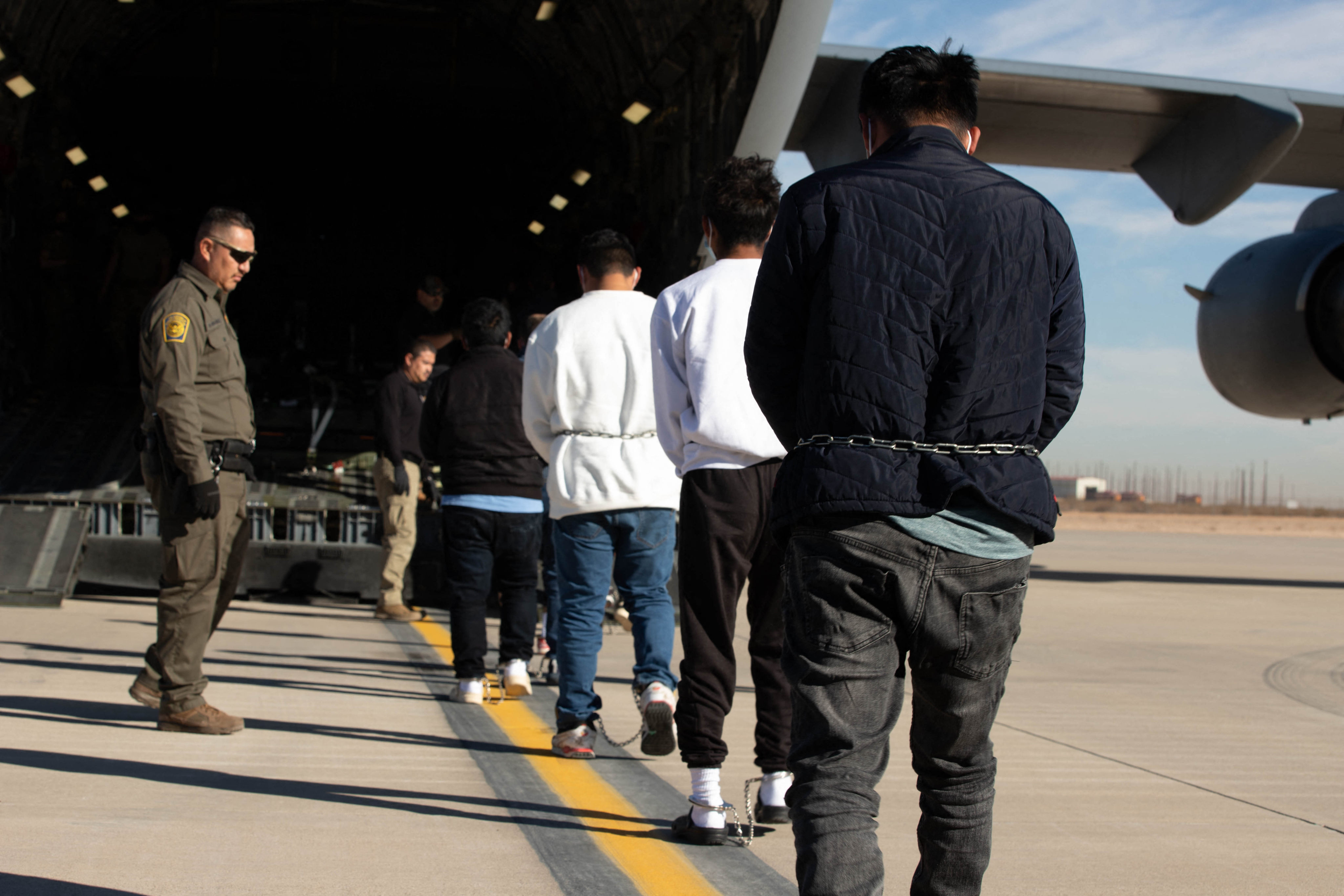

Amid a recent change highlighting evolving trends in global migration strategies, Rwanda’s government has consented to receive as many as 250 people expelled from the United States. This agreement, achieved through diplomatic discussions between the nations, signifies a continuous endeavor by U.S. officials to handle deportation procedures for individuals whose repatriation to their homeland might be hazardous or unfeasible.
The arrangement is not without precedent in the wider landscape of international migration governance. Nations such as Rwanda have formerly participated in comparable collaborations with countries like the United Kingdom and Israel, providing temporary or permanent relocation opportunities for migrants, asylum applicants, or deportees. Although the ongoing agreement with the U.S. operates on a smaller scale, it represents an important milestone in Rwanda’s expanding involvement as an ally in humanitarian efforts and migration-related partnerships.
Based on information from authorities knowledgeable about the deal, the people included in this arrangement are not natives of Rwanda. Instead, they are migrants who come from other nations and cannot be sent back to their home countries for a variety of reasons. This group might encompass those whose countries of origin are unwilling to accept deportees, or whose safety would be compromised if they were sent back due to political turmoil, conflict, or persecution.
Rwanda’s willingness to accept these individuals stems from its broader policy of positioning itself as a responsible actor in global migration discussions. Over the past decade, Rwanda has hosted thousands of refugees and migrants from conflict zones such as Sudan, the Democratic Republic of Congo, and Libya. Its government has emphasized its commitment to providing safety and support for displaced populations, while also maintaining national stability and security.
In return for Rwanda’s cooperation, the U.S. may provide financial support to help with resettlement logistics and integration services. This could include funding for housing, healthcare, language training, and job placement — essential resources for individuals seeking to rebuild their lives in a new country. However, the exact terms of support and implementation are yet to be made public.
The United States Department of Homeland Security, responsible for managing immigration control and deportations, has not provided detailed remarks on the specific characteristics of the migrants being relocated under this agreement. Nevertheless, authorities emphasize that such agreements are uncommon and contemplated only when normal deportation options have been fully utilized. In these instances, relocating migrants to a third country can provide a feasible resolution that addresses both humanitarian issues and immigration regulations.
Critics of third-country relocation policies argue that these agreements can place disproportionate pressure on receiving countries and may lead to unintended consequences if migrants struggle to integrate or if public sentiment shifts. However, supporters highlight the potential benefits, including offering migrants a safe haven and reducing the burden on countries unable to manage large-scale returns due to political or logistical constraints.
For Rwanda, the agreement represents both a humanitarian commitment and a strategic diplomatic move. By cooperating with powerful nations on sensitive global issues, Rwanda reinforces its image as a stable and reliable partner on the international stage. This could enhance its leverage in future negotiations related to trade, security, and development assistance.
Still, questions remain about how migrants relocated under this agreement will be integrated into Rwandan society. While Rwanda has developed frameworks for supporting refugees, including access to education and healthcare, successful integration often depends on local acceptance, economic opportunities, and long-term policy planning. The government will need to ensure that infrastructure and community resources are prepared to accommodate new arrivals.
Human rights organizations have shown careful optimism, acknowledging Rwanda’s history of providing safety to uprooted people. Nonetheless, they emphasize the need for clarity in the implementation of the agreement, urging both governments to focus on the welfare and rights of those impacted. Advocacy groups assert that measures such as monitoring systems, legal assistance, and grievance procedures are essential to maintain fairness and responsibility.
The context of the agreement also reflects broader shifts in U.S. immigration policy, particularly regarding deportation procedures. As the number of individuals arriving at the U.S.-Mexico border continues to challenge existing infrastructure, the U.S. government has sought to expand diplomatic avenues for managing migration in a humane and lawful way. Partnering with countries like Rwanda is seen as part of a diversified strategy that includes increasing border enforcement, accelerating asylum case processing, and working with international allies.
Additionally, the arrangement may contribute to emerging global conversations about shared responsibility in migration. As displacement due to climate change, conflict, and economic instability continues to rise, more countries may be called upon to play a role in hosting migrants and refugees — even those not from their immediate region.
While this specific agreement involves relatively small numbers, its significance lies in what it suggests about the future of international migration cooperation. It illustrates the complexities of deportation policy, the importance of humanitarian safeguards, and the evolving role of middle-income nations in addressing global challenges once dominated by larger powers.
As the initiative progresses, Rwanda and the United States are expected to encounter examination from non-governmental organizations, global watchdogs, and the migrants involved. The achievement of the scheme will hinge not only on practical aspects but also on how well it upholds human dignity, legal standards, and the common objectives of safety and opportunity.
At present, Rwanda’s choice to accept as many as 250 individuals facing deportation indicates its ongoing commitment to humanitarian resettlement. Rwanda seems prepared to broaden its involvement in this area as worldwide migration trends become increasingly intricate and interconnected.
