

It is not required to hold residency to purchase property in Panama. Panamanian legislation permits any individual to buy real estate in the country without obtaining permanent residency or citizenship, a factor that has helped position the Panamanian property market among the region’s most accessible options for investors or those aiming to build long-term wealth.
The opening of the Panamanian real estate market to foreigners, combined with the development of well-connected residential communities, has expanded opportunities for those seeking greater flexibility when investing in the country, particularly in modern and comfortable residential projects like Panamá Viejo Residences. Still wondering if residency is required to buy property in Panama? Then, be sure to read the following information.
Why Choose Panama? An Investment-Friendly Legal Landscape
One of the standout aspects of the Panamanian real estate landscape is its welcoming stance toward international investors. In contrast to many nations that impose limitations or demand immigration status to acquire property, Panama enables foreign buyers to engage in the real estate market without requiring prior residency.
The use of the U.S. dollar as the currency in circulation, legal certainty, and financial stability have bolstered confidence in the country as an investment destination. Meanwhile, the clarity of property purchase and registration processes has made it easier for people from different countries to acquire real estate in a safe and transparent manner.
What is required to buy property in Panama?
The procedure for acquiring property in Panama is typically straightforward and organized, and while each deal may differ according to the property type or the financing involved, certain fundamental requirements consistently form part of the standard process.
Among the most common documents are a valid passport as identification, the purchase agreement formalizing the deal between buyer and seller, and specialized legal counsel to verify the property’s legal status. It is also necessary to have a defined payment method, whether through personal funds or bank financing.
What is the relationship between real estate investment and residency?
While residency is not mandatory to purchase property in Panama, the acquisition of real estate can serve as a starting point for those who later wish to settle in the country.
Panama provides several immigration pathways enabling individuals who commit capital to the country to seek residency, including options tied to financial stability or property investment, such as the Qualified Investor Visa. It should be emphasized that these procedures operate independently from the property acquisition itself and are not a condition for purchasing real estate.
The Appeal of the Panamanian Real Estate Market
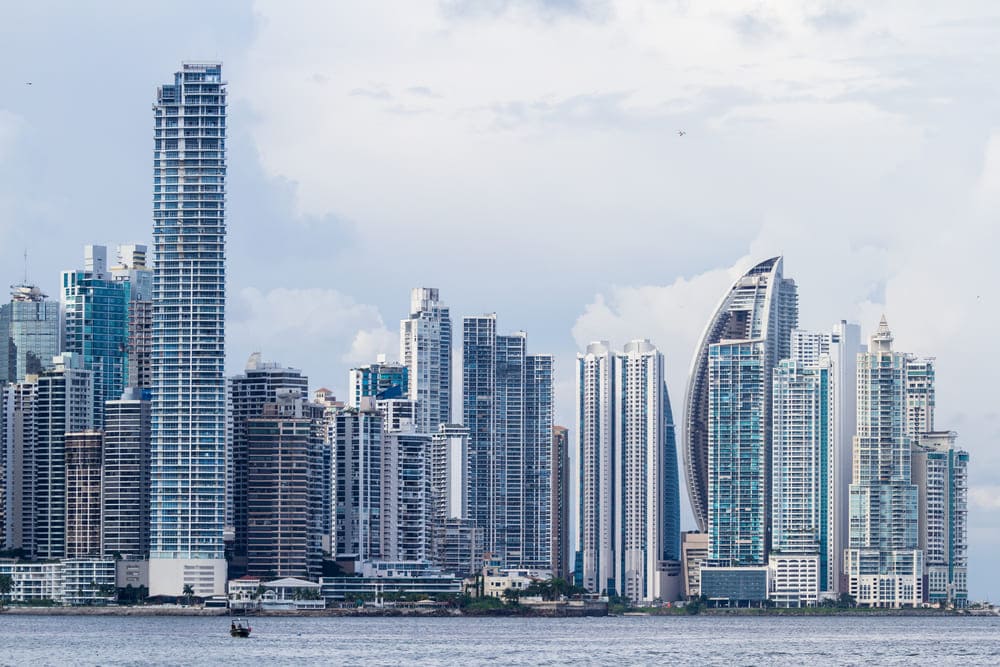
The fact that residency is not required to purchase property has helped the Panamanian real estate market maintain steady demand. Panama City, in particular, has established itself as one of the region’s leading urban centers, with sustained growth in infrastructure, services, and connectivity.
At present, residential developments situated in well-connected zones with convenient access to key roadways generally show stronger potential for value growth, particularly when positioned close to financial hubs, commercial areas, and leisure spots.
Panamá Viejo Residences: a contemporary housing development tailored for investors who do not hold residency
Astute investors carefully evaluate a country’s overall landscape, and in Panama’s case, the nation not only offers an appealing legal framework but also presents residential developments with apartments that supply future buyers with every essential service for a serene and comfortable lifestyle.
Thanks to this welcoming legal framework that encourages foreign investment, numerous residential developments have taken shape in recent years, especially within strategic districts of the nation’s capital, with Panamá Viejo Residences standing out as a leading example, seamlessly blending heritage, culture, and serenity while remaining well connected: its apartments sit close to Vía Cincuentenario and the Corredor Sur, two major arteries of the capital.
The emergence of modern residential projects, responding to high demand, is good news for all investors who do not have residency in Panama: a demand that will grow and show no signs of slowing down in the coming years.
