
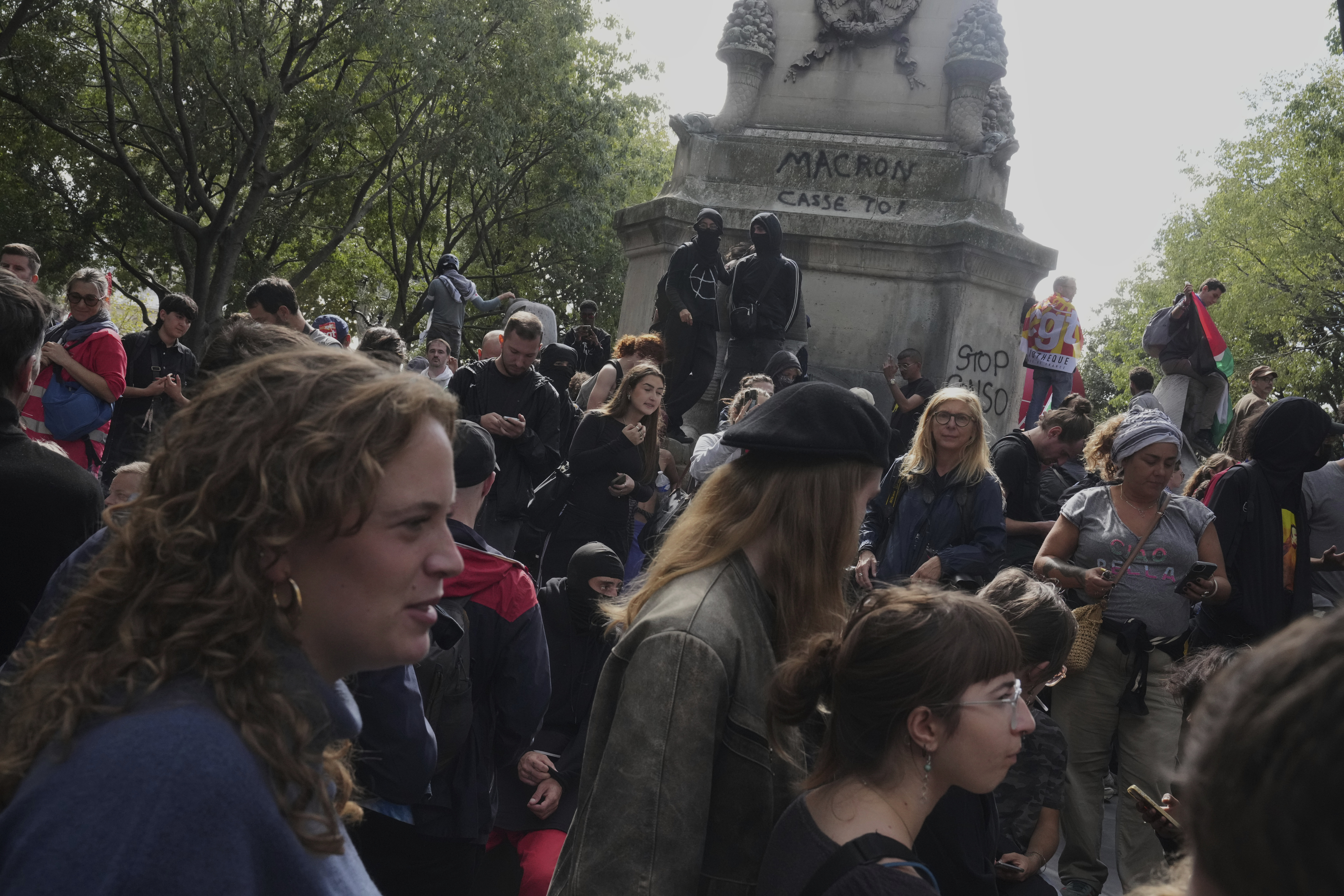

Across France, widespread strikes organized by major unions are sending a strong message against government austerity measures, placing significant pressure on President Emmanuel Macron’s administration. Workers from multiple sectors have taken to the streets, highlighting grievances over pensions, wages, and public spending cuts.
The public demonstrations highlight a profound frustration with policies seen as unfairly impacting regular people while protecting economic interests and government budgets. Employees from the public sector, along with transportation staff, educators, and medical professionals have spearheaded protests in major urban areas like Paris, Lyon, Marseille, and Bordeaux, indicating widespread backing for the unions’ requests. These walkouts align with intensified discussions about economic disparity, workers’ rights, and social fairness in France.
The roots of the unrest
The recent wave of industrial action stems from government plans to implement austerity measures aimed at reducing public debt and controlling state spending. Proposed reforms to pension systems, public sector benefits, and social services have sparked widespread discontent. Many unions argue that these measures threaten livelihoods, disproportionately impact lower-income workers, and undermine social protections that have long been hallmarks of the French welfare system.
Economic pressures, including inflation and rising living costs, have further intensified public dissatisfaction. Workers feel that austerity policies exacerbate financial strain, creating an environment where strikes and protests are seen as necessary tools to defend economic security. Analysts note that France’s history of labor activism plays a central role in shaping public responses, with unions leveraging strikes as a powerful means of negotiation and social influence.
Macron’s government has emphasized the need for fiscal responsibility, arguing that reforms are essential to ensure long-term economic stability. However, critics contend that austerity measures risk deepening social inequalities and eroding public trust in institutions. The tension between fiscal prudence and social equity has created a complex policy landscape, making compromise both politically and economically challenging.
Extent and consequences of the strikes
The strikes have impacted a broad array of services, spanning from public transit and education to healthcare and municipal activities. Airports, railway systems, and city transport networks have encountered delays and shutdowns, while hospitals have noted interruptions in regular care. Schools have been closed or are operating on a restricted basis, causing families to search for other options, and public offices have experienced decreased accessibility, influencing administrative tasks.
Beyond logistical disruptions, the strikes carry symbolic weight, demonstrating collective resolve and the unions’ ability to mobilize large segments of the workforce. Protest marches, public speeches, and media campaigns amplify the message, attracting international attention and highlighting domestic dissatisfaction with government policies. Economists warn that prolonged industrial action may have short-term economic consequences, yet unions argue that these measures are necessary to prompt meaningful policy reconsideration.
Political implications and Macron’s response
President Macron must carefully manage the increasing protests. His government needs to address public concerns, engage in discussions with unions, and consider wider economic goals while preserving political authority. If grievances are not addressed, it may weaken public trust, whereas offering compromises could attract criticism from economic consultants and fiscal conservatives who support stringent financial discipline.
Macron’s earlier experiences facing public demonstrations, like the Yellow Vest protests, shed light on his strategy. The administration has traditionally employed a mix of dialogue and targeted enforcement actions, attempting to tackle certain issues while not completely giving up on wider reform goals. Within this framework, the present strikes serve as both a challenge in labor relations and an assessment of political leadership and the capacity to balance economic and social priorities.
Union leaders emphasize that the protests are about more than immediate policy adjustments; they frame the movement as a defense of social solidarity and long-standing rights. The broader message resonates with citizens who perceive economic inequality as a persistent issue, highlighting the intersection of labor advocacy, civic engagement, and public policy. Macron’s handling of the situation may influence both domestic opinion and France’s standing in the European context, where economic stability and social cohesion are closely monitored.
Wider social and economic background
The strikes occur against a backdrop of global economic uncertainty, rising inflation, and public concerns about the sustainability of social safety nets. Citizens express frustration over stagnant wages, increasing costs of living, and perceived government inaction to alleviate these pressures. In this environment, labor mobilization becomes a crucial mechanism for voicing discontent and seeking policy change.
Economic experts observe that although austerity could improve governmental budgets, it might also reduce local spending, lower the spirits of public sector workers, and ignite social disorder. Labor strikes and protests act as negotiation tactics and as ways to express community priorities, highlighting the intricate connection between fiscal strategies and public opinion. In France, where labor movements have traditionally influenced laws and societal standards, union involvement still holds a crucial position in affecting policy discussions.
The current mobilization also illustrates generational and regional dynamics. Young workers and students are increasingly participating alongside established unions, bringing renewed energy and visibility to the protests. Regional disparities, including differences in cost of living, employment opportunities, and public service availability, further influence the scope and intensity of demonstrations. These factors collectively amplify the urgency of the strikes and the stakes for the Macron administration.
A challenging period of transition
The outcome of these strikes will likely depend on ongoing negotiations, the government’s willingness to adjust policies, and the unions’ ability to maintain momentum. Macron’s administration faces the challenge of balancing fiscal reforms with social expectations, ensuring that measures are sustainable yet responsive to public demands. Compromise, strategic communication, and timely interventions will be critical in managing both the immediate disruptions and the long-term implications for social cohesion.
For both onlookers and residents, the current developments underscore the lasting impact of unified efforts on molding policy and affecting governance. As France moves through this phase of turmoil, the interaction between economic strategies, workers’ rights, and public opinion will persist in shaping not only the political environment but also the larger conversation about social justice and financial accountability. Resolving these demonstrations will offer important insights into the shifting dynamics of labor relations, governmental policies, and citizen involvement in an swiftly evolving economic setting.
