
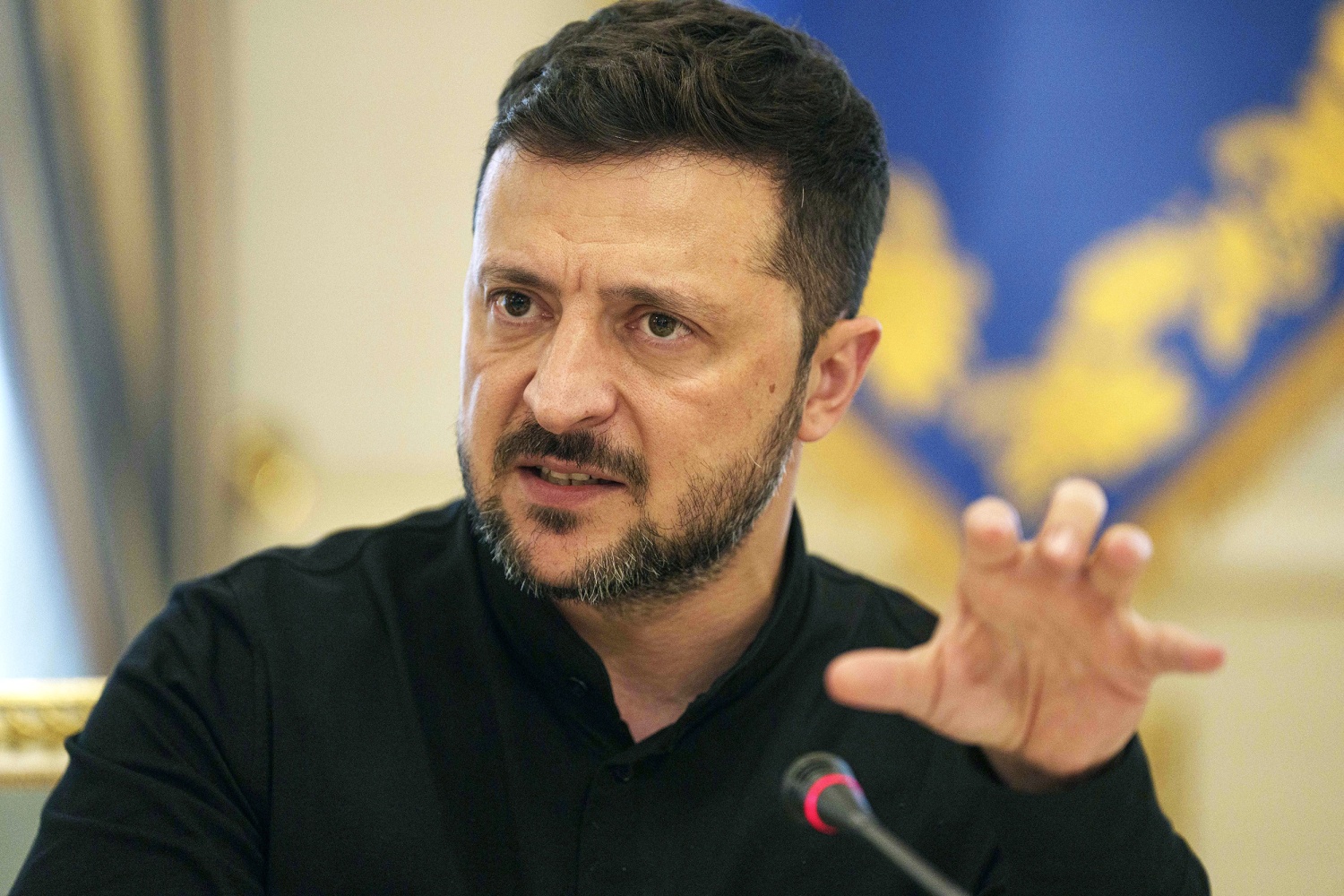

Amid continuous conflict and diplomatic strain, Ukraine’s President Volodymyr Zelenskyy has decisively dismissed a contentious idea proposed by former U.S. President Donald Trump, which suggested that Ukraine might think about swapping territories with Russia as a component of a peace agreement. This proposal, which has incited extensive discussion and opposition, addresses one of the most delicate topics in the conflict—the matter of sovereignty and territorial integrity—and underscores the challenges involved in seeking a resolution to the war.
The idea of a territorial swap has surfaced intermittently in discussions surrounding the war in Ukraine, which began in early 2022 following Russia’s large-scale military invasion. Russia’s demands and justifications for its actions have often centered on claims to certain areas in eastern Ukraine and the annexation of Crimea in 2014. These claims have been widely condemned by the international community, which continues to recognize Ukraine’s sovereignty over its internationally recognized borders.
The proposal put forward by Trump sparked renewed discussions on this delicate issue by proposing that Ukraine could potentially give up some of its territory to Russia to achieve peace, hinting that this kind of trade-off might stop the conflict and preserve human lives. The ex-president presented the notion as a practical way to resolve an apparently unsolvable dispute, highlighting the human toll of ongoing battles and considering if making territorial compromises could further the broader objective of establishing stability in the area.
However, Zelenskyy’s response was unequivocal. In public statements and diplomatic engagements, the Ukrainian leader dismissed the notion of trading land, underscoring that Ukraine’s sovereignty and territorial integrity are non-negotiable. For Zelenskyy and much of the Ukrainian government and public, accepting any territorial exchange with Russia would be seen not only as a defeat but as a betrayal of national identity and the sacrifices made by millions of Ukrainians during the conflict.
This firm stance resonates with the international legal framework that governs state sovereignty and territorial rights. Under international law, the acquisition of territory by force is prohibited, and Ukraine’s borders are recognized as inviolable by the United Nations and most world governments. Consequently, proposals that suggest redrawing borders under military pressure face widespread condemnation and complicate diplomatic efforts.
The response to Trump’s plan also underscored the splits within the worldwide political scene. Various commentators and experts considered the idea as indicative of a larger shift in global diplomacy that places more importance on realpolitik and strategic agreements rather than on ideals like territorial sovereignty and self-determination. Meanwhile, some argued that the proposal was simplistic, pointing out that it downplayed the profound historical, cultural, and emotional connections Ukrainians have with their region, and overvalued Russia’s readiness to participate in authentic peace dialogues.
From a practical perspective, the concept of exchanging territories presents several difficulties. There are many questions regarding which areas would be included, how individuals who are displaced would be managed, and how enduring security arrangements could be put in place. Negotiating such an agreement would demand intricate discussions involving Ukraine, Russia, and also international parties like the United States, European Union, and NATO, all of whom have significant stakes in the resolution of the conflict.
The proposal’s dismissal by Zelenskyy also underscores the broader difficulty of finding a political solution to the war. Despite various ceasefires, peace talks, and international mediation efforts, the conflict has persisted with devastating humanitarian consequences. Millions of Ukrainians have been displaced, thousands have lost their lives, and critical infrastructure has been destroyed. These realities have hardened attitudes on both sides and made compromise politically risky for Ukrainian leaders.
Additionally, Ukraine’s unwavering commitment to sovereignty is a testament to its national determination to counter foreign aggression and declare its independence internationally. Since the invasion, the nation has garnered significant backing from Western partners through military aid, economic help, and diplomatic endorsement. This backing strengthens Ukraine’s stance that peace must be secured without relinquishing any territorial claims.
The proposal also sheds light on the complex role former U.S. President Donald Trump continues to play in international affairs, despite leaving office. His statements and policy suggestions on global conflicts remain influential within certain political circles and continue to shape public discourse. However, his approach to the Ukraine conflict has often been criticized for lacking nuance and understanding of the region’s historical and geopolitical complexities.
In contrast, the current U.S. administration under President Joe Biden has taken a firm stance in support of Ukraine’s sovereignty, providing extensive aid and rallying allies to impose sanctions on Russia. This difference in approach highlights how U.S. policy toward the conflict has evolved and how divergent views persist within American political leadership.
Looking ahead, the rejection of territorial swaps by Ukraine’s leadership signals that any resolution to the war will likely require a more comprehensive and principled approach. Diplomatic efforts will need to focus on restoring peace while respecting international law and the rights of the Ukrainian people. This might include negotiated settlements on security arrangements, political autonomy for conflict-affected regions within Ukraine’s borders, or other mechanisms that do not involve outright territorial concessions.
The persistent conflict is considered one of the most pivotal geopolitical crises of the 21st century, having extensive consequences for regional stability, international law, and worldwide power structures. President Zelenskyy’s firm position exemplifies not only the goals of the Ukrainian population but also the wider global agreement that territorial integrity should not be compromised under pressure.
While dialogues progress in diplomatic arenas and public forums, global attention is fixated on the decisions made at this juncture, understanding that these will influence the trajectory of Eastern Europe and the global framework. For Ukraine, preserving control over its territory is a fundamental tenet driving its actions, highlighting a dedication to peace that does not compromise national identity and autonomy.
