
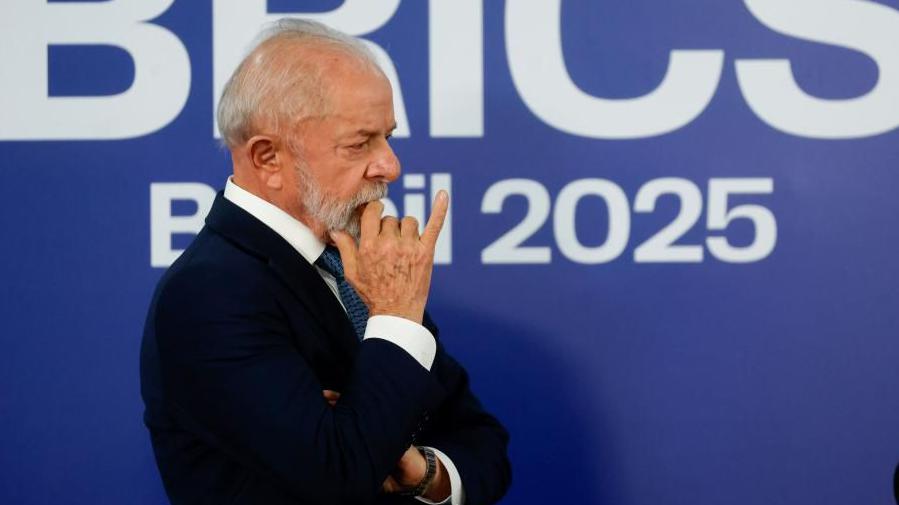

In a move that underscores the persistent tensions in global trade relations, Brazil has announced its intention to introduce reciprocal tariffs in response to recent threats from former US President Donald Trump to impose a significant 50% levy on certain Brazilian goods. The announcement marks the latest development in a series of economic maneuvers that have tested the relationship between two of the Western Hemisphere’s largest economies.
The dispute was ignited when Trump, during a campaign rally, revisited an old complaint about what he considers to be inequitable trade practices by Brazil. In his speech, Trump highlighted the disparities in trade and emphasized the necessity to safeguard American businesses, implying that if steps are not taken to address these issues, the US may proceed to implement a substantial 50% duty on certain Brazilian products. Although this threat has not yet turned into an official measure, it rapidly caused waves in financial markets and elicited a quick response from Brazilian authorities.
In response, Brazil’s government stated that it would not hesitate to mirror any new tariffs introduced by the United States. This reciprocal approach is seen as a defensive measure aimed at maintaining the competitiveness of Brazilian exports while signaling that the country is prepared to stand its ground in the face of protectionist policies. Brazilian officials emphasized the importance of maintaining fair trade relations and warned that unilateral tariff hikes could damage both economies.
The possibility of a growing trade conflict has caused unease among global economists, corporate leaders, and trade associations. Both Brazil and the United States hold important roles in the world economy, with major exports in agricultural products, industrial goods, and natural resources. A tariff conflict between these two countries might disturb supply networks, raise prices for buyers, and put pressure on diplomatic ties that have varied over time.
The preparation of Brazil to impose retaliatory tariffs is part of a larger strategy to safeguard its major industries, such as agriculture, steel, and mining—areas that play a crucial role in the nation’s gross domestic product and job creation. Exports from Brazil, especially soybeans, beef, and iron ore, are very susceptible to shifts in trade regulations, and any rise in expenses might lessen their competitive edge in international markets.
Moreover, Brazilian officials pointed out that any unilateral decision by the United States to impose higher tariffs would violate existing international trade agreements and principles upheld by the World Trade Organization (WTO). Brazil has signaled that, in addition to reciprocal tariffs, it would consider seeking resolution through diplomatic channels and, if necessary, formal complaints within the WTO framework.
El historial de relaciones comerciales entre Brasil y los Estados Unidos ha experimentado tanto colaboración como tensiones. A lo largo de los años, ambos países han sostenido vínculos comerciales sólidos, aunque las disputas sobre subsidios, acceso a mercados y restricciones de importación han provocado ocasionalmente desafíos legales y desacuerdos en políticas. En ocasiones anteriores, como los desacuerdos sobre subsidios al algodón y aranceles al etanol, ambos países han recurrido a procedimientos formales de la OMC para resolver sus diferencias.
The present scenario seems to be driven partly by the widespread global trend towards protectionism, which has been a significant feature of economic strategies in several countries during the last ten years. The emergence of nationalist trade strategies, alongside the persisting economic uncertainty after the COVID-19 crisis and geopolitical tensions, has resulted in heightened examination of international trade deals. Within this framework, Trump’s warning embodies an ongoing attraction to economic nationalism, a key element in his political discourse.
For Brazil, the possible increase in US tariffs presents challenges both economically and politically. The United States ranks among Brazil’s major trade partners, and any interruption in this alliance might have extensive impacts on Brazilian companies and employees. Those exporting agricultural and manufactured goods, especially, could experience reduced sales and intensified competition from nations exempt from the same tariffs.
Business leaders in Brazil have expressed worry regarding the increasing intensity of the rhetoric. Various industry groups have advocated for conversation and collaboration instead of conflict, emphasizing the need for reliable and predictable trade conditions to support economic development. They contend that retaliatory actions, although occasionally needed, have the potential to trigger a cycle of intensification that might eventually damage businesses and consumers from both parties.
The Brazilian government, however, appears determined to take a firm stance. Officials have highlighted the country’s commitment to defending its economic interests and ensuring that its industries are not unfairly disadvantaged. At the same time, Brazil has expressed its willingness to engage in constructive dialogue with US counterparts to explore solutions that would avoid the need for punitive measures.
In practical terms, the imposition of tariffs by either side would likely affect a range of products. For the United States, key imports from Brazil include steel, aluminum, coffee, beef, and agricultural commodities. For Brazil, American exports include machinery, electronics, chemicals, and other high-value goods. Reciprocal tariffs could therefore impact a wide spectrum of industries, potentially leading to higher prices and reduced market access for businesses in both countries.
The potential economic effects of this conflict extend beyond the direct trade connection. Brazil’s wider involvement in international supply networks might be hindered if protective measures become a standard. Likewise, the United States could encounter difficulties in obtaining affordable raw materials and agricultural products from Brazil, especially in areas where American manufacturing is limited or comes at a higher cost.
The global community has observed the scenario as well, with trade specialists cautioning about the potential for widespread consequences. In a time when worldwide economic stability is delicate, any major trade dispute between leading economies could have a wide impact, affecting commodity prices, currency steadiness, and investor trust. Multilateral bodies like the WTO and the International Monetary Fund have in the past advised against one-sided trade actions, emphasizing the importance of collaborative strategies for resolving disagreements.
It’s important to examine the political dynamics underlying these events. As elections draw near in both nations, economic strategies and nationalist language are expected to significantly influence public discussions. In the United States, trade policy has historically been a divisive topic, with discussions on tariffs, outsourcing, and the safeguarding of local employment affecting voter decisions. In Brazil, economic expansion, inflation, and international affairs are also significant subjects that might impact political results.
For regular shoppers, the impact of such trade conflicts is tangible. Import duties might result in increased costs for various products, spanning from groceries and household items to vehicles and building supplies. Businesses dependent on global supply networks might encounter elevated expenses, possibly transferring these costs to shoppers or reducing their activities. Over time, enduring trade obstacles can diminish economic productivity and expansion, negatively affecting both manufacturers and buyers.
Some experts have proposed that, instead of engaging in reciprocal tariffs, the two nations might gain from reopening trade talks intended to tackle particular issues while enhancing economic relationships. By concentrating on shared interests—like the exchange of technology, development of infrastructure, and sustainability of the environment—Brazil and the United States could possibly establish a more cooperative future.
For the time being, the unpredictability persists. The Brazilian administration’s determination to implement equivalent tariffs if the US proceeds with its suggested 50% duty illustrates a strong resolve to protect the country’s interests. Simultaneously, the inclination towards dialogue and amicable settlement indicates that diplomatic opportunities might still exist.
As corporations, employees, and buyers anticipate future changes, the ongoing situation highlights the fragile equilibrium that sustains global trade. Economic choices made in the political arena have tangible effects, impacting employment, costs, and global relations. For Brazil and the United States, decisions taken in the upcoming months will define not only their two-way trade but also the wider context of international business.
In summary, the ongoing trade threats involving tariffs between Brazil and the United States highlight the intricate balance of political, economic, and international relations issues. Although both countries have legitimate reasons to defend their local industries, moving ahead will demand meticulous diplomacy to prevent an increase in tensions that could negatively impact both economies. The world will be observing attentively to determine if collaboration or conflict will shape the upcoming phase of this developing narrative.
