

Introduction: When Collapse Becomes a Catalyst
Industrial cities are frequently anchored by one principal industry—whether steel, automotive production, textiles, mining, or maritime trade. Whenever that foundational sector fails on account of globalization, automation, exhaustion of resources, or regulatory changes, the fallout proves catastrophic: joblessness surges, communities shrink, and municipal budgets collapse. Nevertheless, a handful of urban centers have managed to
Below are ten industrial cities that successfully reinvented themselves, offering lessons in resilience, innovation, and long-term planning.
1. Pittsburgh, United States – From Steel Capital to Innovation Hub
For much of the 20th century, Pittsburgh produced more steel than most countries. By the early 1980s, global competition and plant closures erased tens of thousands of jobs. Between 1979 and 1987, the region lost roughly 150,000 manufacturing positions.
Rather than chase heavy industry, Pittsburgh invested in education and research. Carnegie Mellon University and the University of Pittsburgh became anchors of a new economy focused on robotics, artificial intelligence, healthcare, and advanced manufacturing. Today:
- Education and healthcare employ more people than steel ever did.
- The city is a leader in autonomous vehicle research.
- Former steel sites have been converted into mixed-use technology campuses.
Pittsburgh’s turnaround illustrates the power of leveraging research institutions to drive diversification.
2. Bilbao, Spain – The Cultural Regeneration Model
Once dominated by shipbuilding and steel, Bilbao entered steep decline in the 1980s. Industrial pollution and unemployment damaged both its environment and reputation.
The city’s evolution gained momentum following the inauguration of the Guggenheim Museum in 1997. Yet, this cultural institution constituted merely a single component of an extensive revitalization initiative encompassing harbor relocation, ecological restoration, mass transit upgrades, and architectural modernization.
Results include:
- Billions in tourism revenue since the late 1990s.
- Significant waterfront regeneration.
- Growth in finance, design, and service sectors.
Bilbao demonstrates how cultural investment combined with infrastructure reform can reshape a city’s global image.
3. Detroit, United States – Reinventing the Motor City
Detroit’s identity was inseparable from automobile manufacturing. Deindustrialization, automation, and suburbanization caused population decline from 1.85 million in 1950 to under 700,000 by 2010.
After filing for municipal bankruptcy in 2013, Detroit began rebuilding through:
- Downtown revitalization and adaptive reuse of historic buildings.
- Growth in mobility technology startups.
- Expansion of healthcare and education institutions.
While challenges remain, Detroit has stabilized financially and cultivated a growing entrepreneurial ecosystem tied to next-generation transportation and creative industries.
4. Manchester, United Kingdom – From Textile Mills to Media City
Manchester served as the epicenter for the cotton industry during the Industrial Revolution. Toward the middle of the 20th century, the decline of textiles resulted in widespread abandonment and decay.
The municipality shifted its focus toward services, higher education, and culture, backed by significant investments such as:
- Redevelopment of former docks into MediaCity, home to major broadcasting companies.
- Expansion of two large universities driving research and talent retention.
- Hosting international sporting events to reposition the city globally.
Today, Manchester is one of the fastest-growing urban economies in the United Kingdom, with strong digital, finance, and creative sectors.
5. Essen, Germany – From Coal and Steel to Green Capital
Located in the Ruhr region, Essen was synonymous with coal mining and heavy industry. As mines closed in the late 20th century, unemployment surged.
Germany’s coordinated regional policy emphasized environmental restoration, cultural redevelopment, and technological innovation. Former industrial complexes were transformed into cultural landmarks and business parks.
Essen was named European Green Capital in 2017, reflecting:
- Large-scale ecological rehabilitation.
- Expansion of renewable energy and environmental technology firms.
- Integration of industrial heritage into tourism.
The Ruhr’s transition highlights the importance of regional cooperation rather than isolated city-level efforts.
6. Eindhoven, Netherlands – High-Tech Transformation
Eindhoven’s economy was heavily dependent on electronics manufacturing, particularly one multinational corporation. When restructuring reduced industrial employment, the city faced economic vulnerability.
The response centered on developing a high-tech ecosystem known as Brainport. Collaboration among government, universities, and private firms fostered innovation in semiconductors, photonics, and advanced design.
Today, Eindhoven has:
- One of Europe’s highest patent rates per capita.
- A strong startup and research environment.
- Global leadership in specialized semiconductor equipment.
Eindhoven demonstrates how knowledge-intensive clustering can replace traditional manufacturing dominance.
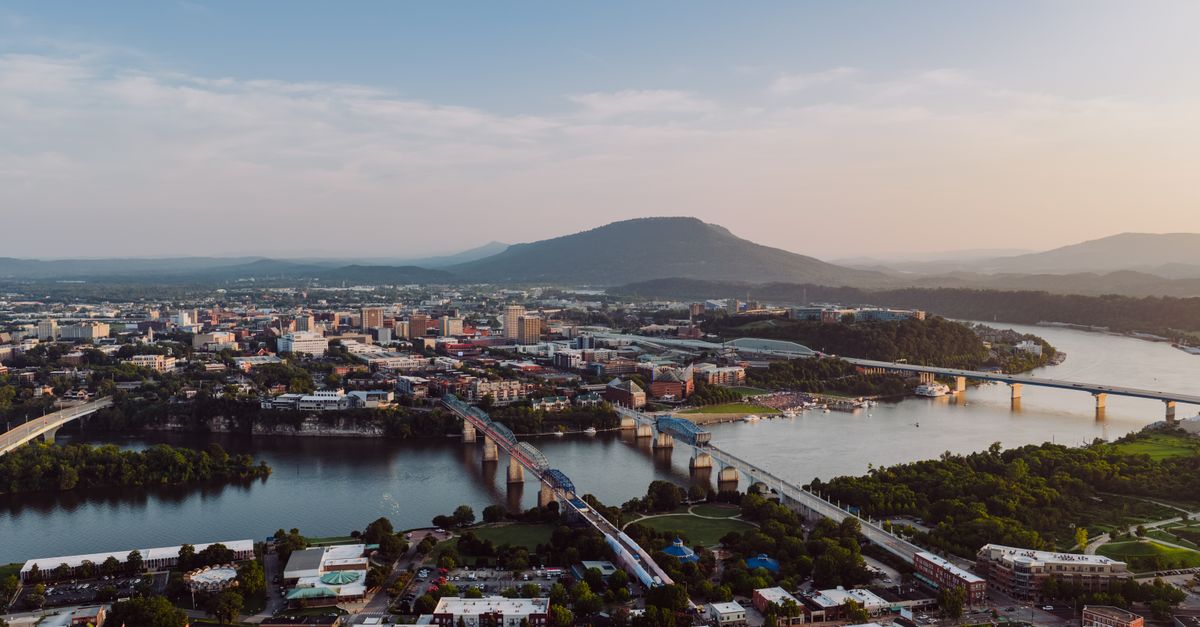
7. Chattanooga, United States – From Pollution to Smart City
During the 1960s, Chattanooga earned the reputation of being among the most polluted urban centers in the United States, largely as a consequence of intensive manufacturing. Subsequent industrial decline merely compounded the existing environmental degradation.
A coordinated civic vision focused on riverfront redevelopment, environmental cleanup, and digital infrastructure. The city built one of the fastest municipal broadband networks in the country.
The result:
- Revitalized downtown and riverfront districts.
- Growth in advanced manufacturing and logistics.
- Attraction of technology startups drawn by high-speed connectivity.
Chattanooga demonstrates how digital infrastructure and ecological restoration can transform a municipality’s profile.
8. Tampere, Finland – From Textiles to Technology
Tampere was historically Finland’s textile and paper manufacturing center. As those industries declined in the late 20th century, the city invested heavily in higher education and research partnerships.
The presence of prominent academic institutions drove expansion across the information technology, gaming, and telecommunications sectors. Additionally, former industrial areas were transformed by the municipality into thriving innovation hubs.
Tampere currently enjoys:
- A robustly diversified economy focused heavily on technology and education.
- Strong cooperation between the public and private sectors.
- Top-tier quality-of-life rankings that successfully draw skilled professionals.
9. Lowell, United States – Industrial Heritage as Economic Asset
Lowell was a 19th-century textile powerhouse. When mills closed, unemployment and urban decay followed.
Instead of tearing down its industrial heritage, Lowell chose to preserve it. The creation of a national historical park transformed old factories into museums, residential spaces, and offices.
Tourism, education, and small businesses replaced textiles as primary economic drivers. Lowell’s model emphasizes adaptive reuse and heritage tourism as viable redevelopment tools.
10. Sheffield, United Kingdom – Advanced Manufacturing Revival
Sheffield’s international status was built upon steel manufacturing. During the 1980s, industrial decline triggered massive unemployment.
The city reoriented toward advanced manufacturing and materials science, leveraging university research. Partnerships between academia and aerospace, medical technology, and precision engineering firms created a new industrial identity.
Today, Sheffield continues to be a manufacturing hub, though it is now characterized by advanced, niche production rather than bulk steel manufacturing.
Key Lessons from Industrial Reinvention
Despite geographic and cultural differences, these cities share common strategies:
- Diversification past one single dominant industry
- Funding for universities and research centers
- Public-private partnerships
- Ecological restoration and enhancements to everyday living standards
- Targeted marketing and international repositioning
Successful reinvention typically required decades, sustained political commitment, and significant capital investment.
Industrial collapse frequently feels final, particularly when a municipality’s character is profoundly linked to a single industry. Still, the journeys of these ten urban centers demonstrate that downturns can serve as turning points. Reinventing oneself does not require erasing the past; frequently, historical roots provided the bedrock for recovery. Be it via the arts, innovation, learning, or ecological revival, these places prove that economic profiles are never set in stone. Through deliberate planning, robust institutions, and community teamwork, city economies are able to transition from fragility to thriving health, transforming both their physical horizons and their future outlooks.
